
Defining Quality and Reliability Standards in Suspended Scaffolding
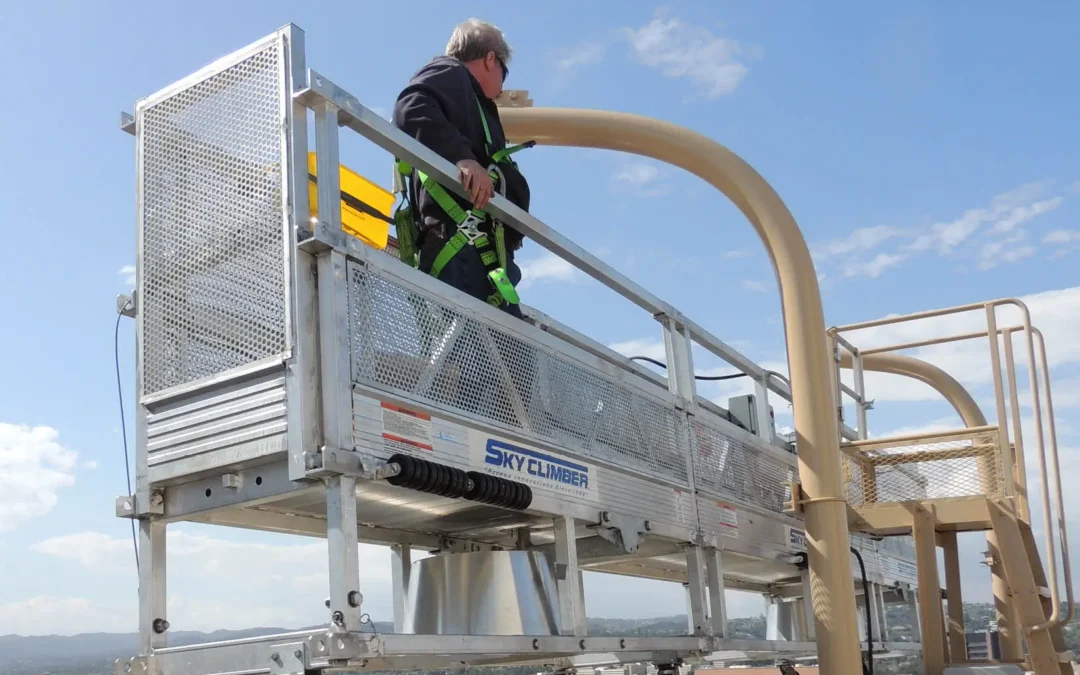
Suspended scaffolding operates in environments where failure is not an option. Systems are installed at height, exposed to weather, subject to repeated loading, and relied upon by crews performing critical work. In this context, quality and reliability are often referenced, but not consistently defined.
Most conversations around standards focus on compliance. Compliance matters, but it does not fully explain why some suspended scaffolding systems perform predictably year after year while others create friction, downtime, and risk despite meeting requirements.
As projects become more complex and expectations continue to rise, the industry benefits from a clearer definition of what quality and reliability standards actually mean in suspended scaffolding.
What “Standards” Typically Mean in Suspended Scaffolding
In practice, the word “standard” is used to describe several different things.
For some stakeholders, standards are regulatory or safety requirements. These establish minimum thresholds for use and are essential to protecting workers and ensuring legal compliance.
Others refer to standards as industry guidelines, certifications, or accepted practices that specify the design, installation, and operation of systems.
In many projects, standards are interpreted as specifications written into drawings, scopes of work, or contract documents.
Each of these plays an important role. None of them fully define how a suspended scaffolding system will perform once it is installed and used over time.
This distinction becomes clearer when systems leave technical drawings and enter the field.
Compliance Sets the Baseline, Reliability Defines the Outcome
Compliance answers foundational questions. Is the system permitted? Does it meet safety requirements? Can it be installed and used according to regulations?
Reliability answers operational questions. Will the system behave predictably after weeks or months of use? Will it support productivity without constant adjustment? Will crews trust it when conditions change?
Experienced contractors and asset owners understand this difference intuitively. Two systems may both be compliant, yet one becomes a dependable part of the work while the other demands constant attention.
From a manufacturing standpoint, this is where standards move beyond documentation and into design decisions, material selection, and long-term support.
Defining Quality in Suspended Scaffolding Systems
Quality in suspended scaffolding begins well before equipment reaches a jobsite.
It starts with engineering decisions grounded in real load cases, access paths, and use patterns. When exposed to dynamic loading, weather, and repeated adjustments, systems designed solely to satisfy theoretical calculations often struggle.
Manufacturers who take input from the field into account when designing tend to focus on details that aren’t always on a spec sheet. Some examples are platform rigidity when loads are uneven, hoist performance when starts and stops happen often, and connection points that can be put together and taken apart many times without losing quality.
Another important part of quality is consistency in manufacturing. Tight tolerances, material traceability, and controlled fabrication processes ensure that systems perform the same way across production runs. When consistency slips, reliability in the field follows.
Documentation and labeling also fall under quality. Clear load ratings, installation guidance, and maintenance instructions reduce interpretation errors and support safe use across different crews and regions.
In short, quality is established long before installation. The field simply reveals whether it was engineered in from the start.
Defining Reliability in Real-World Operating Conditions
Reliability is not proven during initial installation. It is proven through repetition.
Suspended scaffolding systems are assembled, adjusted, dismantled, and reinstalled across multiple projects. They are exposed to temperature swings, moisture, wind, and varying levels of operator experience.
Reliable systems share several traits. They behave predictably under load without requiring constant tuning. They maintain alignment and performance despite repeated use. Components wear in a controlled, expected way rather than failing prematurely. When service is required, issues are diagnosable and support is accessible.
From a manufacturing perspective, this often means designing components to exceed minimum requirements, even when standards do not explicitly demand it. Examples include selecting materials and finishes that tolerate corrosion beyond baseline requirements or designing hoist internals for extended duty cycles rather than intermittent use.
Reliability is also reinforced through feedback loops. Manufacturers that stay engaged with contractors and service teams gain insight into how systems behave after thousands of hours of use. That information drives design refinements that may never appear in a compliance checklist but materially affect performance.
The Role of Lifecycle Support in Reliability Standards
Quality and reliability do not end at shipment.
Installation support, commissioning guidance, and training all influence how systems perform. Even well-designed equipment can underperform if installation practices vary or training is inconsistent.
From an equipment manufacturer’s standpoint, reliability standards include how effectively users are prepared to operate and maintain the system. This includes clear training materials, access to technical support, and realistic maintenance guidance.
Parts availability and service responsiveness also play a role. When a component requires replacement, the time between identification and resolution matters. Reliable systems are supported by supply chains and service models designed to minimize disruption.
Lifecycle engagement allows manufacturers to identify trends, address recurring issues, and improve future designs. Reliability, in this sense, is sustained rather than assumed.
Measuring Quality and Reliability in Practice
Quality and reliability can be observed through practical indicators.
Consistent system behavior across multiple sites suggests strong design and manufacturing discipline. Reduced need for corrective action or field modification indicates alignment between engineering intent and real-world use.
Crew confidence is another indicator. When crews trust a system, they focus on their work rather than the access equipment supporting it. Supervisors spend less time resolving access issues and more time managing productivity and safety.
Predictable maintenance requirements also signal reliability. Systems that degrade gradually and visibly allow for planned intervention. Unexpected failures introduce risk and cost.
From a manufacturer’s perspective, long-term performance data is often more telling than initial acceptance tests. Systems that continue to perform after years of use confirm design assumptions in a way no single inspection can.
Why Clear Standards Matter to the Industry
Defining quality and reliability standards more clearly benefits all stakeholders.
Owners gain confidence that access systems will support schedules and safety expectations over the life of a project. Contractors reduce downtime, rework, and operational friction. Crews work from systems they can trust.
For manufacturers, clear standards provide a framework for design priorities and continuous improvement. They also create transparency around what differentiates systems beyond basic compliance.
As suspended scaffolding applications expand into more complex environments, the cost of unclear standards increases. Projects become less forgiving, and the margin for error narrows.
Raising Expectations Through Defined Standards
Quality and reliability standards in suspended scaffolding cannot be reduced to a single document or certification. They are the result of engineering discipline, manufacturing consistency, field feedback, and long-term support.
Compliance establishes the baseline. Reliability defines whether systems perform as intended over time.
In suspended scaffolding, the true standard is not what is approved on paper. It is what holds up in use, project after project, year after year.
Resources for Understanding Suspended Scaffolding Standards
Quality and reliability in suspended scaffolding are best understood through a combination of industry guidance, regulatory frameworks, and real-world application knowledge.
Industry Associations and Guidance
Scaffold & Access Industry Association (SAIA)
SAIA provides education, technical guidance, safety initiatives, and industry best practices related to suspended scaffolding and access systems.
Regulatory and Safety Frameworks
- OSHA regulations related to suspended scaffolding and powered platforms
- Applicable ANSI (A10.8-2019 and A11.1-2019) standards governing access equipment, components, and use
- Local and regional authority requirements that may supplement national codes
Manufacturer Documentation and Technical Guidance
- Product manuals and load ratings
- Installation and commissioning guidance
- Maintenance and inspection recommendations
- Training materials tailored to specific systems and use cases
Need Support Interpreting Standards or Selecting the Right System?
Understanding suspended scaffolding standards, compliance requirements, and product capabilities can be complex, especially when applications vary by site, structure, and environment.
Our teams at Sky Climber work closely with contractors, owners, and engineers to:
- Clarify applicable standards and requirements
- Support product selection based on real-world use conditions
- Provide guidance on system configuration, installation, and lifecycle support
If you have questions about suspended scaffolding products, compliance considerations, or application-specific challenges, we are available to help you navigate those conversations with clarity and confidence.
Get in Touch
Tel: (800) 255-4629
Email: info@skyclimber.com